

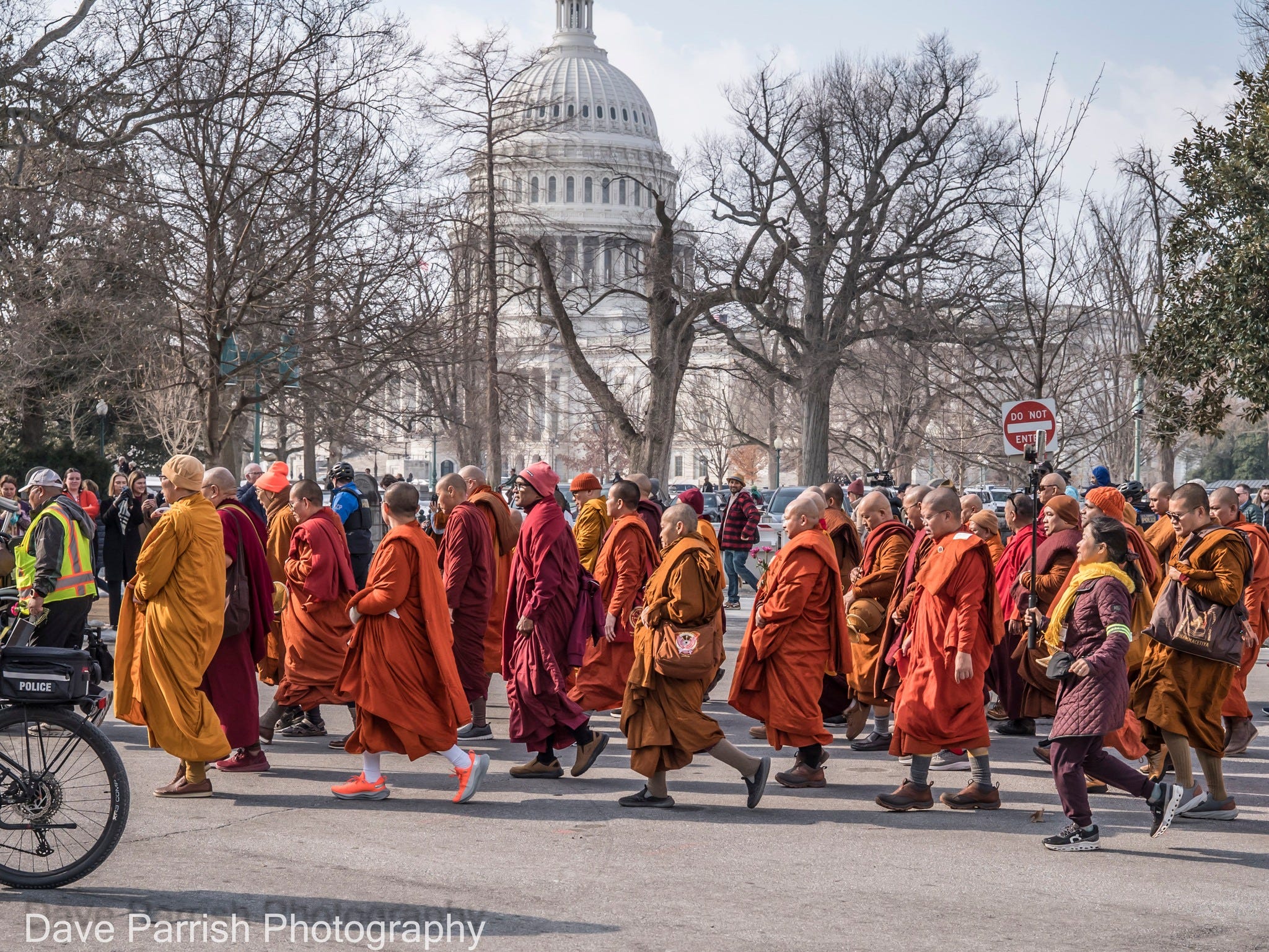
After leaving Georgia, the Buddhist monks walked through snow and sleet across South Carolina, North Carolina, Virginia, and Maryland. Step by mindful step, they made their way north. When they arrived in Washington, DC on February 10, 2026, thousands gathered at the National Cathedral — joined by leaders of many faiths — to welcome them. Kimberly Bassett, Secretary of State for Washington, DC, issued a proclamation marking the end of the walk, but not our journey for peace. Standing on the cathedral steps, Venerable Bhikkhu Pannakara, spiritual leader of the walk, reflected:
“It is overwhelming for us. This is the moment I will remember for the rest of my life… And I hope you do the same.”1
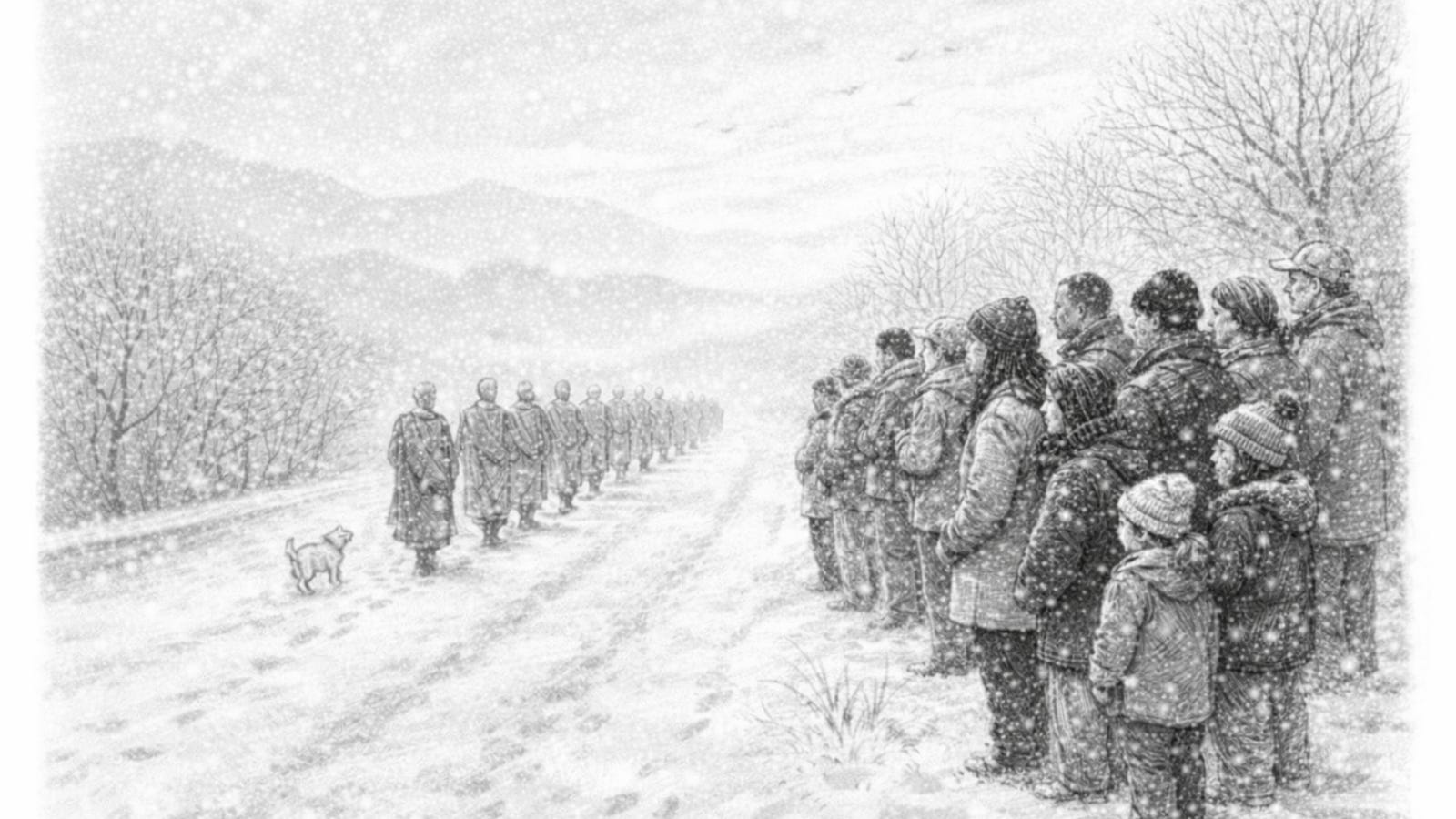
The monks had walked 2300 miles. Thousands welcomed them along the way, and millions followed online across Facebook, Instagram, and TikTok. Even their Peace dog, Aloka, gathered more than 1.6 mm followers.
The numbers were impressive. But what moved me were the quiet, human connections when people reached toward one another in peace and kindness.
Connecting in peace
When asked why the monks undertook the Walk for Peace, Venerable Pannakara, responded,
This world has been receiving so much anger and hatred… That is why it's coming back to us with all kinds of sufferings, all kinds of disasters. We walk, not to bring any attention to us, but we just hope that we raise awareness of peace to all the people who we will meet along the road.
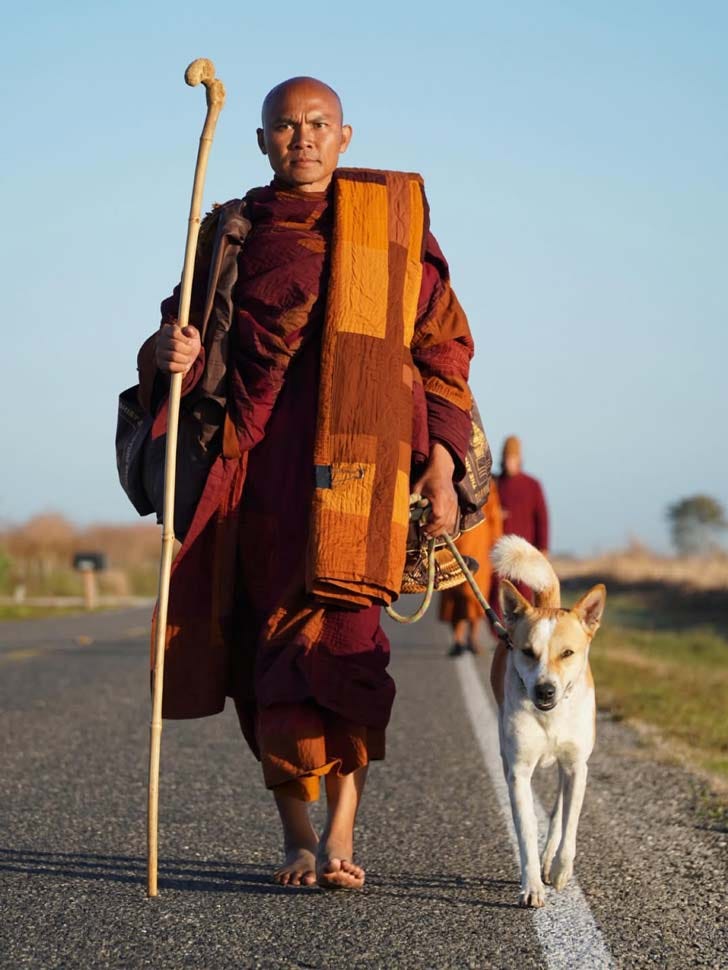
Many who came together sought a respite from this anger and hatred. When asked what brought them to the Walk for Peace, people in multiple states shared:
Right now, I think we just need something positive. It doesn’t matter where you’re from, you can come stand here and just witness a peaceful experience. “There’s nobody dragging anybody out of cars, nobody’s yelling, nobody’s angry. Everybody is just here in the moment.2
I thought the Walk for Peace was a healthy antidote to the mass deportations being carried out by Immigrations and Customs Enforcement, most recently in Minneapolis. We need to love each other. We don’t need what’s going on right now.3
Every time you turn on the television, it’s something negative. When I saw this on social media, it was like a shiny beacon of hope.4
Welcoming the monks in Virginia, Governor Abigail Spanberger declared February 2 “Walk for Peace Day,” saying,
The monks are serving as a powerful reminder to us that peace is a daily practice that begins within and radiates outward to families, communities, and nations. I am grateful and proud to present this proclamation to the venerable monks, thanking them for giving us the opportunity to come together, the opportunity for people of all faith backgrounds and beliefs to join in a shared aspiration, to live with greater compassion, understanding, and goodwill.5
Connecting with strangers
The monks wrote about their journey on social media, including this entry about our commonalities:
Our journey is simply a gentle reminder, offered with open hearts, that beneath all our differences, we share a common longing for peace, a common capacity for kindness, a common humanity that quietly binds us all together.6
Just being present – standing side by side as the monks approached – fostered peaceful connections among people who had never met. Reporters captured many such moments.
A retired schoolteacher said she spent two hours on the roadside meeting people.
We had conversations and learned about each other’s lives. It was a coming together of strangers in a peaceful way. Moved to tears, she added, “They’re spreading the message of peace. I mean, how much better can it get?7
A young man who has used a wheelchair since 2024, travelled alongside the monks from his hometown of Fredericksburg to Washington, DC. Fellow travelers helped him navigate the icy roads. There are many things happening in the world, he said. To see people gathering peacefully and setting an example is a wonderful thing. Aware that two monks had been injured when a truck struck the walk’s escort vehicle, he was deeply moved to see Venerable Maha Dam Phommasan – who lost his leg in the accident – enter an event in a wheelchair. I have been on this journey of trying to find my independence. But this really shows how connected we really are.
A woman described watching the monks walk past: It was peaceful. They approached, and everyone just – She made a calming gesture with her hands. It was really nice. She was so moved she hugged the woman beside her, and they cried together.
Connecting through organizing care
Some people may doubt that our walk can bring peace to the world – and we understand that doubt completely. But everything that has ever mattered began with something impossibly small. A single seed. A first mindful breath. A quiet decision to take one step, then another.
Reading about the Walk for Peace in South Carolina revealed how the monks’ journey could foster peace beyond the individual.
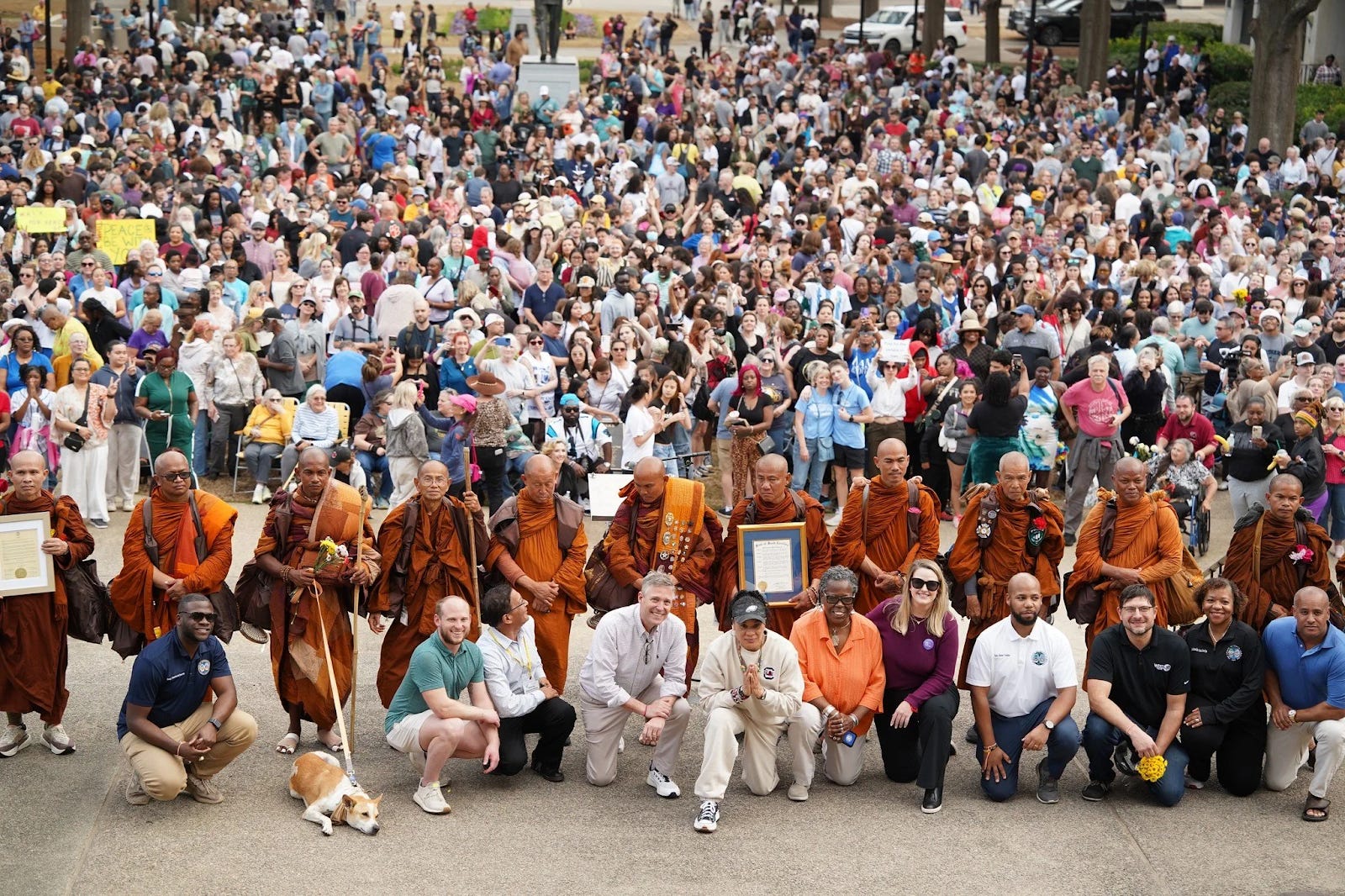
On January 10, 2026, in Columbia, South Carolina, leaders, members of an interfaith coalition, and the monks gathered for a conversation about peace and care. Afterward, they walked together to the State House for a Peace Gathering, where more than 20,000 people lined the streets and filled the grounds to welcome them.
At the State House, Cate Mayer, Founder and CEO of Be The Ones greeted the monks. Mayor Daniel Rickenmann presented a City of Columbia Proclamation, and Senator Deon Tedder issued a state proclamation declaring January 10, 2026, “Walk for Peace Day.”
I was curious about Be The Ones and their role in supporting the Walk for Peace. In looking further, I learned that it is a nonpartisan, non-profit organization whose mission is: to build healthier communities, a more equitable democracy, and expanding power by removing barriers to local civic participation across South Carolina.
I also learned that the organization was asked to serve as the official Community Partner for the Walk for Peace just three days before the monks entered the state. They agreed, recognizing the shared responsibility that came with the role.
The organization’s staff began coordinating with the Walk for Peace team to support the monks’ stay and help organize the events. They also reached out to local partners to join the effort, and those partners responded quickly.
South Carolina is deeply rooted in community, but what unfolded still caught us off guard…The scale of generosity was overwhelming.
Their grassroots effort blossomed into a network of collective care: churches, civic leaders, medical professionals, organizations and community members offering food, housing, medical care, transportation – whatever was needed. Law enforcement officials across county, state and local levels coordinated closely with each other, sharing lessons learned in real time.
The significance of their work had deepened:
While being the official state partner might have started as logistics, it quickly became something much deeper. It became a living example of what collective care actually looks like.
Together, those involved figured out how to keep the monks and Aloka safe, protect the public, and seamlessly coordinate across districts as the monks walked through the state. Notably, in organizing care for others, they also cared for each other.
What unfolded…was a felt reminder that care doesn’t need to be forced... When people are invited into something rooted in compassion and purpose, they rise to it.
Might this example of organizing care help explain why the Walk for Peace has resonated so widely? In a time of anger and hatred, many of us spend our energy pushing back against cruelty. Resistance matters. Yet resistance alone does not build what comes next.
The Walk for Peace shows us something more.
It invites us to practice peace — not only as an inner stance, but as a shared act. It nourishes the quiet human moments when we reach toward one another in loving-kindness. And in doing so, it helps us discover that collective care for each other is possible, even in challenging times, when we choose to walk for peace — and organize — together.
Change doesn’t happen alone,

Deema Zein, February 11, 2026. “Millions inspired by monks’ ‘Walk for Peace.’” Newshour Nation. https://www.pbs.org/newshour/nation/watch-millions-inspired-by-monks-walk-for-peace
February 4, 2026. “Buddhist monks' peace walk across US draws crowds.” Bangkok Post. https://www.bangkokpost.com/world/3189939/buddhist-monks-peace-walk-across-us-draws-crowds
Reback, Storms. February 2, 2026. “Imagine All the People,” The Assembly. https://www.theassemblync.com/news/culture/faith/monks-peace-walk-north-carolina/
Reback, Storms. February 2, 2026. “Imagine All the People,” The Assembly. https://www.theassemblync.com/news/culture/faith/monks-peace-walk-north-carolina/
McNamee, Madison. February 2, 2026. Buddhist monks reach Richmond on 100th day of Walk for Peace https://www.12onyourside.com/2026/02/02/monks-walking-peace-arrive-richmond/
January 4, 2026, Dhammacetiya Walk For Peace Day 71 – Crawford and Lexington, Georgia. Facebook post.
Reback, Storms. February 2, 2026. “Imagine All the People,” The Assembly. https://www.theassemblync.com/news/culture/faith/monks-peace-walk-north-carolina/